Patagonia Sues Gap for Copying Flap Pocket Design

Patagonia Inc., a high-end outdoor clothing retailer, sued Gap Inc. for allegedly copying their snapped flap pocket it has used on fleece outwear.

Only one month after suing Walmart Inc. and Robin Ruth USA for trademark infringement of their P-6 Trout logo, on November 22, 2022 Patagonia sued Gap for “willfully and deliberately selling fleece jackets that mimic its flap pocket and rectangular “P-6” logo without permission”.
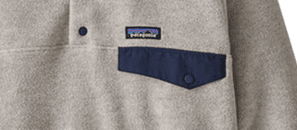
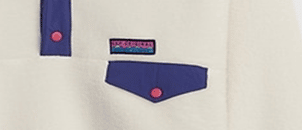
As reported by Reuters, Patagonia refers to its snapped flap pocket as “iconic”, having been used on the Snap-T pullover fleece since 1989.  It further claims that the Snap-T design has been exhibited at the Museum of Modern Art in New York and Victoria and Albert Museum in London.

The complaint cites an online review posted by a Gap customer referring to a Gap product as an “obvious Patagonia ripoff”.

Patagonia claims that Gap’s “adoption of designs and logos bearing even more similarity cannot have occurred by accident” as in the past they warned Gap to stop copying their products.

Gap has yet to file a response to the complaint.
Copyright term extension amendments of the Copyright Act to come into force later this year

Amendments to the Copyright Act introduced in the Budget Implementation Act, 2022, No. 1, which extend the term of copyright in Canada by 20 years from the life of the author plus 50 years to the life of the author plus 70 years, will come into force later this year on 30 December 2022. This extension in copyright term satisfies one of Canada’s obligations under the Canada-US-Mexico Agreement.

Notably, these amendments will not revive copyright for works already in the public domain (i.e. works where the copyright term has already expired).

For more information, please see Division 16 of Part 5 the Budget Implementation Act, 2022, No. 1 and Order in Council 2022-1219.


Oyen Wiggs ranked as one of Canada’s Best Law Firms

For a second year, Oyen Wiggs has again been included in the Intellectual Property category of Canada’s Best Law Firms by the Globe & Mail’s Report on Business. The list was created based upon feedback from almost 25,000 lawyers, as well as in-house counsel and legal executives throughout the legal and business communities. We are proud of the talented team at Oyen Wiggs, and clearly our clients and colleagues share our confidence.  Thank you to all who supported Oyen Wiggs in the survey and interview process.

More informaton here.

Federal Court finds infringement of Crocs’ industrial design

Over the years, Crocs filed a number of lawsuits alleging infringement of its clog shoe designs. One of them was against USA Dawgs. Earlier this year, Crocs obtained a judgement of infringement and was awarded over $6 million in damages. Read Crocs’ press release here.

In 2017, the battle between the two continued into Canada. Crocs Canada sued Canada Dawgs for industrial design infringement of its fleeced clog design.

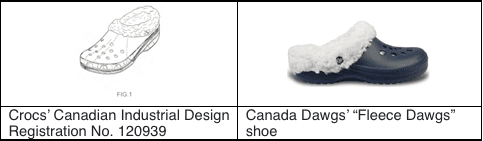
In its decision issued October 2022, the Federal Court found infringement of Croc’s Industrial Design by Canada Dawg’s “Fleece Dawgs” shoes, and awarded Crocs an accounting of profits.

In the Court’s analysis, Croc’s Industrial Design was entitled to a broad scope of protection as there were substantial differences between the design and the prior art. Features of the design were not dictated solely by utilitarian function as there are many ways to do different features and there are design choices involved (for example, in respect of the fleece lining and collar). From the perspective of the “informed consumer” who is familiar with the market, taking into account the scope of protection, the overall designs were found not substantially different.

The Court also commented that Canada Dawg’s focus on points of difference caused it to lose sight of the fact/fail to appreciate that Croc’s Industrial Design protects the overall appearance of the combination of its features.

Read the full decision here.

Apple appeals refusal of “Smart Keyboard” trademark registration

On October 28, 2022, Apple Inc. filed an appeal of the U.S. Patent and Trademark Office’s (USPTO) decision to refuse the registration of its SMART KEYBOARD trademark.

Apple applied for the SMART KEYBOARD trademark in the U.S. for use in association with an iPad cover launched in 2015. The SMART KEYBOARD iPad cover can function as a keyboard and stand. The USPTO rejected Apple’s application in 2018 and this rejection was upheld by the Trademark Trial and Appeal Board (TTAB) in 2021.

The USPTO and the TTAB are of the view that SMART KEYBOARD is a generic term describing “technologically advanced keyboards” and therefore can not be a registered trademark.

Apple disagrees with this viewpoint, pointing out that there are hundreds of other registered trademarks in the U.S. containing the word “Smart” including other trademarks owned by Apple such as SMART COVER, SMART CASE, SMART CONNECTOR, etc. In addition, Apple argues that SMART KEYBOARD has rarely been used to refer to anything other than Apple’s iPad cover.

The case will be heard in the U.S. District Court for the Eastern District of Virginia.

See the full article here.

Tattoos – a prickly copyright dilemma

Recently a federal court in Illinois issued the first ever decision awarding damages against a video game developer for reproducing tattoos in their video game.

The case centered on Take-Two Interactive Software Inc. producing wrestling games which depicted real wrestlers, including exact replicas of the wrestlers’ tattoos. The tattoo artist who inked the tattoos reproduced in the games was awarded only $3,750 in damages.

Tattoo artists, individuals receiving tattoos and corporations reproducing tattoos in games should all take note of this decision and take steps to avoid ending up in litigation themselves.

Tattoo artists should consider including an agreement as to the rights to the tattoo as a preliminary form they have customers sign prior to receiving their tattoo. Such an agreement could assign the rights from the artist to the tattooed individual or create a framework for when the artist should be compensated if the tattoo is used in media.

Celebrities or other public figures who can expect to commercialize their image should consider entering into a similar agreement with their tattoo artist to have their artist assign all rights to the celebrity and waive any moral rights. Such an agreement would help avoid potential costly litigation in the future and ensure that the individual retains full rights to their own image.

Corporations planning on reproducing tattoos should consider including licencing agreements or assignments as part of their due diligence to ensure that they have licenced the right to reproduce the tattoo from the correct party.

USPTO Shortens Deadline for Responding to Trademark Office Actions

The United States Patent and Trademark Office (the USPTO) will soon reduce the time applicants have to respond to office actions for trademark applications.

Starting December 3 2022, applicants will have three months to respond to an office action. The response deadline can be extended by an additional three months by payment of an additional fee of 125 USD and submission of the appropriate form. Currently, applicants have six months to file a response to an office action. The new shortened response period will not apply to Madrid Protocol applications.

The USPTO states that one reason for the change is to reduce the time it takes to prosecute a trademark application.

Read more here.

Intellectual Property Ontario Begins Offering Services

Intellectual Property Ontario (IPON) officially opened for business on 12 October 2022.  The agency, first announced in March 2022, assists Ontario-based researchers and businesses with leveraging their intellectual property and competing globally. IPON will initially assist clients in the medical technology, artificial intelligence, and automotive sectors, but intends to broaden its scope of operations in the future.

IPON’s services include online educational resources on IP, advisory services, mentorship, and grants for assistance from legal counsel in protecting their IP.

For more information, please see the news release here.

Amendments to Patent Rules in force as of October 3, 2022

As of 3 October 2022, amendments to the Patent Rules are in force. Such amendments allow Canada to meet its obligations under the Patent Cooperation Treaty and to further streamline the patent examination process.

The most significant amendments include the introduction of excess claim fees and requests for continued examination (click here to read more).

Click here for the announcement from the Canadian Intellectual Property Office.

Apple Kept Dynamic Island Trademark “Hidden” on an Island Ahead of the Feature’s Debut

Apple kept the name of its Dynamic Island, a new feature introduced with the iPhone 14, secret from competitors and other prying eyes by filing for the trademark in Jamaica ahead of the feature’s public introduction. Filing in the Jamaican Intellectual Property Office (JIPO) was an effective strategy because the JIPO does not have an online searchable trademark database and interested parties must therefore perform trademark searches in person.

In the past, interested parties have successfully discovered the names of Apple’s upcoming products using searchable trademark databases available from other intellectual property offices.

Read more at Mashable and Bloomberg.

get_sidebar();