CIPPIC v. Sahni: Can AI Be an Author? Federal Court to Decide

How does using artificial intelligence in creating a work affect copyright protection under Canadian law?

The Federal Court will now have to decide this question after the Samuelson-Glushko Canadian Internet Policy and Public Interest Clinic (“CIPPIC”) commenced a challenge to a Canadian copyright registration for an image called “Suryast”. The registration lists both the RAGHAV Artificial Intelligence Painting App and Mr. Ankit Sahni as co-authors. CIPPIC is arguing that the work lacks originality and that an AI program cannot be an “author” under Canadian law.

This challenge references the United States Copyright Office’s 2023 decision regarding an attempt in the United States to register copyright in the same image. There, the Copyright Office ruled that an AI program could not be an author. However, it is unclear how the Federal Court will deal with this question (applying Canadian law).

Issues surrounding AI authorship, such ownership of AI-generated works and an AI’s ability to assign or waive copyright, highlight the need for IP law to adapt to questions posed by novel technology.

A complete copy of the Notice of Application is available here.

CIPO LAUNCHES MYCIPO PATENTS

MyCIPO Patents was launched by the Canadian Intellectual Property Office on July 17.  MyCIPO Patents is CIPO’s new online portal for patent services.  MyCIPO Patents is part of CIPO’s Next Generation Patents initiative to modernize its patent IT systems.

For now, MyCIPO Patents only allows for the filing of Patent Cooperation Treaty national phase entry applications and the payment of maintenance fees. Further functions are forthcoming. For example, MyCIPO Patents will eventually include functionality for accessing the CIPO patent database, filing of regular applications and divisional applications and submitting communications on existing applications.

Notably, since CIPO is migrating data to MyCIPO Patents, the CIPO patent database is currently unavailable and the issuance and grant of patents is suspended.

More information is available from CIPO here, here, and here.

Federal Court issues injunction against unauthorized streaming of sporting events

The Federal Court has issued a permanent injunction against a series of unidentified John Does as a result of an effort by a number of broadcasters to combat unauthorized streaming of live sporting events. This case is a continuation of a series of cases brought by broadcast rights holders against such unauthorized streaming.

The Court granted the broadcasters two remedies. The first remedy was a permanent injunction against the John Does to not infringe a specified list of works (comprising a number of live sporting events). This was a wide injunction, with the list being modifiable to add new works. The broadcasters had requested the ability to add works without requiring approval of the Court, which was refused. The order instead allows the broadcasters to add to the list by bringing appropriate motions before the Court.

The second remedy was a mandatory injunction against certain internet service providers (ISPs). This injunction (which was largely unopposed by the ISPs) requires the ISPs to actively block a list of IP addresses carrying the unauthorized streams. This list may be updated from time to time by the broadcasters without requiring a court order.

Click here to read the full decision.

CHARTER OF THE FRENCH LANGUAGE-REGULATION RESPECTING THE LANGUAGE OF COMMERCE AND BUSINESS

Bill 96, enacted in June 2022, introduced significant changes to the Charter of The French Language regarding the use and prominence of non-French language trademarks on store signage, product packaging, and advertising and increased penalties for non-compliance with the new provisions.  The strict approach of Bill 96 with respect to non-French trademarks, exempted only registered trademarks from translation into French.

On 26 June 2024 the Quebec Government published final amendments to the Regulation respecting the language of commerce and business which addressed some of the concerns regarding this limited exemption from translation, adding pending applications to the definition of registered trademarks.

A further significant clarification introduced through these Regulations relates to the translation requirements for product packaging.  The Regulations provide that a common law trademark (not only a registered trademark) need not to be translated, if no corresponding French version of the common law mark appears on the Canadian Trademarks Register. The Regulations further exclude from the translation requirements any business and product names.

The Regulations, however, maintain requirements that generic or descriptive terms that are part of the non-French trademarks be translated and that the translation must appear on the product or on a medium permanently attached to the product. This requirement applies equally to registered and common-law trademarks.

Although the Regulations provide guidance and some clarity regarding the amendments to the Charter, it remains to be seen how the Office québécois de la langue française (OQLF) will apply the amendments and the exceptions from translation when product names contain descriptive or generic text.


Proposed Amendments to the Trademarks Regulations Published

Proposed amendments to the Trademarks Regulations to support and implement certain amendments made to the Trademarks Act were recently published in the Canada Gazette. The amendments to the Act already received royal assent in late 2018 but have yet to come into force. Together with these amendments to the Act, the amendments to the Regulations would allow for cost awards, case management, and confidentiality orders in proceedings before the Trademarks Opposition Board (TMOB) and for the Canadian Intellectual Property Office to indicate that an official mark holder is not a public authority or has ceased to exist.

The goal of these amendments is to allow TMOB proceedings to be carried out more efficiently and cost-effectively and to make it potentially easier to overcome objections based on the citation of official marks.

Find the Regulatory Impact Analysis Statement and the proposed text of the amendments to the Regulations in the Canada Gazette Part 1, Volume 158, Number 23. 

Congratulations to Hilton Sue

We are delighted to announce that Hilton Sue has been re-appointed as Vice Chair of the Licensing Executives Society International (LESI) Americas Committee. Hilton’s tireless dedication and exceptional contributions have significantly enhanced the committee’s efforts to benefit LESI and its members throughout the Americas. Congratulations to Hilton on this well-deserved reappointment!


LEAVE TO APPEAL TO THE SUPREME COURT OF CANADA FILED IN STEELHEAD LNG (ASLNG) LTD. v. ARC RESOURCES LTD.

An application for leave to appeal the decision in Steelhead LNG (ASLNG) Ltd.. v. ARC Resources Ltd. (2024 FCA 67) was recently filed by Steelhead LNG (ASLNG) Ltd. (“Steelhead”) in the Supreme Court of Canada (SCC).

In the Federal Court of Appeal (FCA) decision, the FCA upheld the Federal Court’s finding that section 42 of the Patent Act requires physical use of the invention and that “using the goal, purpose or advantage of an invention for commercial benefit” is insufficient to constitute “use” in the context of infringement. Accordingly, the FCA held that Arc’s alleged act of “disclosing to prospective business partners and stakeholders, as a proof of concept, drawings, specifications and cost estimates of a design which, if ever built, would allegedly infringe the patent”, did not constitute use of the invention in the context of infringement.

If leave to appeal is granted by the SCC, the SCC would have an opportunity to consider and clarify the meaning of “use” in the patent infringement context.

Read the FCA’s decision here. View the Supreme Court of Canada case information for this leave to appeal application here.

Trademarks: First Use and the Importance of Compelling Witnesses

In F.I.A.L. Finanziaria Industrie Alto Lario, S.P.A. v. Galperti SRL, 2024 FC 976, the Applicant successfully appealed a decision of the Trademarks Opposition Board granting an opposition against its GALPERTI trademark application.

In granting this appeal, the Federal Court affirmed the principle that it is not fatal for a date of first use claimed in a trademark application to be later than the actual date of first use of the trademark. As such, while the Applicant claimed a date of first use of 1999 in its application, it was able to rely on evidence of use of its GALPERTI mark from as early as 1986 to overcome the opposition based on a confusingly similar mark used as early as 1991.

Notably, the Applicant relied on affidavits of retired employees which did not include any corroborative documentary evidence. Despite the lack of documentary evidence, the Court found that the affidavits were sufficient as both affiants were “retired and the evidence does not show that they have any stake or conflict of interest to be anything other than truthful in their affirmations.”

Click here to read the full decision.

CIPO Revises Its Position on the Registrability of Designs Applied to Buildings and Structures

As of 14 June 2024, CIPO has revised its position that designs applied to buildings and structures constructed on site are not registrable as industrial designs.

Historically, CIPO was of the view that designs applied to buildings and structures were not registrable as they were not finished articles to which designs could be applied. Previous versions of CIPO’s Industrial Design Office Practice Manual (the “IDOP”) stated that “to be registrable, these designs must be applied to buildings or structures capable of being preformed, portable and delivered separately to purchasers as finished articles, or in sections to be put together by a simple operation such as bolting.”

After the change, CIPO considers buildings and structures (including buildings and structures constructed on site) as acceptable finished articles to which designs can be applied.

The revised practice is applicable to all pending applications regardless of when they were filed. Note that applications for registration of a design applied to a building or structure must still meet all other requirements for registrability under s. 7 of the Industrial Design Act.

More information is available in section 13.02.03.04 of the current version of the IDOP.

The Due Care Standard for Reinstatement of Patents and Patent Applications

Introduction

This article will outline the due care standard for reinstatement of Canadian patents and patent applications, and how the standard has been applied.

Beginning on the second anniversary of filing, yearly maintenance fees must be paid to the Canadian Intellectual Property Office (CIPO) for a patent application or a granted patent to remain in effect. If the anniversary is missed, the maintenance fee may be paid with an additional late fee up to 6 months following the anniversary, or up to two months from the date CIPO sends notice requiring the maintenance fee and late fee to be paid, whichever is later.[1] Failure to pay the maintenance fee with late fee in that period results in the deemed abandonment of the patent application or deemed expiry of the patent. However, under certain circumstances, it is possible to request reinstatement of the application or reversal of the deemed expiry of the patent (referred to generally as “reinstatement” for the rest of this article).

In 2019, amendments to the Patent Act and Patent Rules came into force that allow for reinstatement of the application or patent after the late fee period and up to 18 months after the initial maintenance fee due date if:

  • the request for reinstatement provides the reasons for the failure; and
  • the Commissioner of Patents determines “that the failure occurred in spite of the due care required by the circumstances.”[2]

If the Commissioner of Patents determines that the applicant/patentee did not exercise due care, the deemed abandonment of the application or deemed expiry of the patent will stand.

The due care standard also applies to applicants requesting reinstatement of an application abandoned for failing to request examination and pay the late fee within the later of: (a) 6 months from the deadline for requesting examination; and (b) 2 months from the mailing of a notice by CIPO.[3]

CIPO applies the due care standard strictly. At the time of writing, only approximately 15% of the 293 decisions issued have resulted in successful reinstatement.[4]

While the first decision regarding a request for reinstatement was made on 5 July 2021, the first successful request for reinstatement did not occur until 20 December 2021, nearly six months later. Figure 1 shows how decisions have developed over time.

Figure 1

For the decisions where it was determined that due care was taken, Figure 2 shows the reason for the failure to pay.

Figure 2
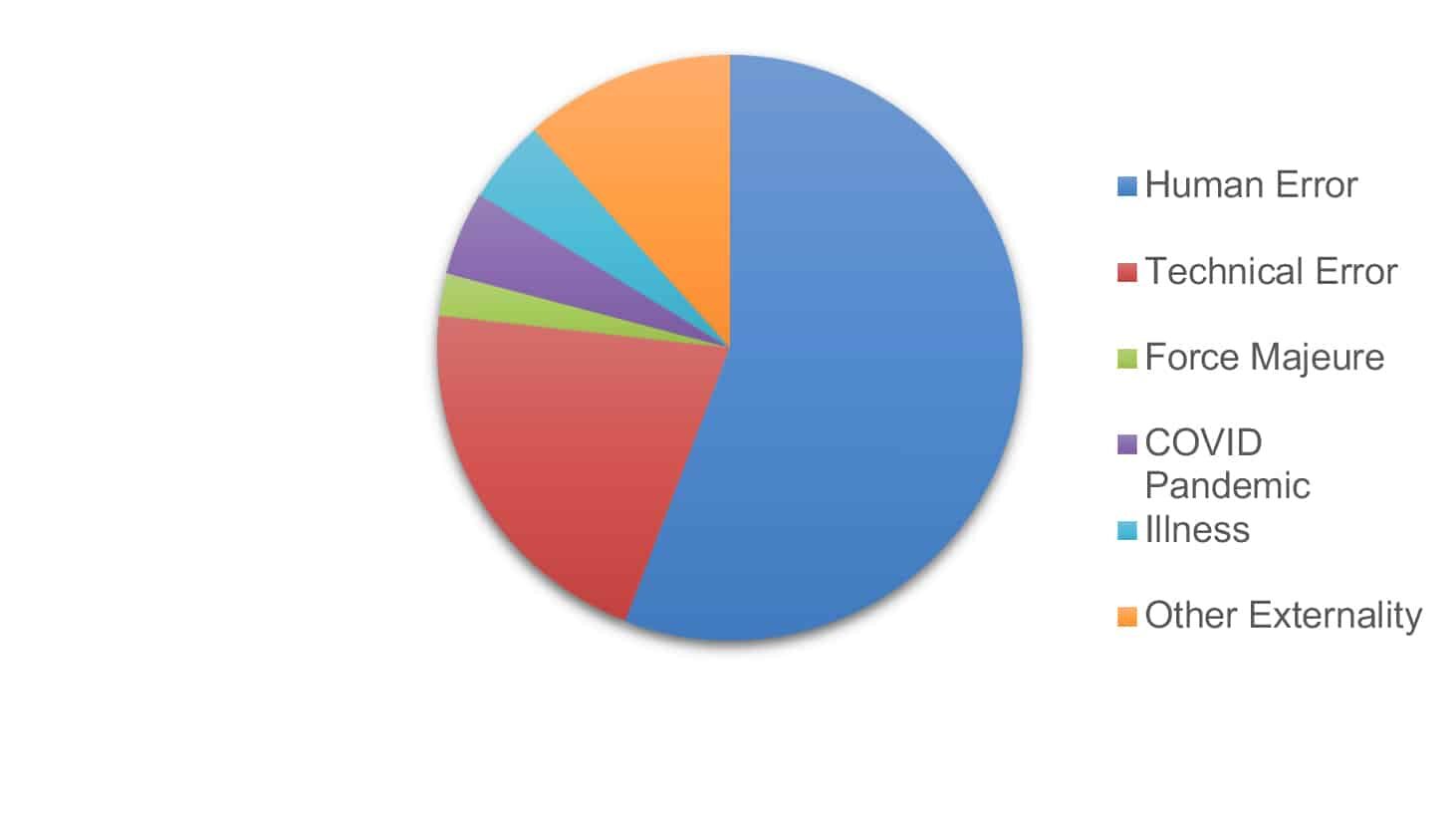
Cases in which due care has not been met

As evident from the foregoing, the vast majority of reinstatement requests result in CIPO making a finding that due care was not taken. A recent decision from the Federal Court was the first judicial decision reviewing a denied request for reinstatement.

Taillefer v. Canada (Attorney General), 2024 FC 259

CIPO’s strict application of the due care standard was upheld in Taillefer v. Canada (Attorney General), 2024 FC 259, where the applicant unsuccessfully sought judicial review of a decision of the Commissioner of Patents denying a request to reinstate Canadian Patent 2,690,767 that was deemed abandoned for failure to pay the tenth anniversary maintenance fee.

In Taillefer, the Canadian patent agent sent several email reminders to the applicant regarding the tenth anniversary maintenance fee and the late fee. However, the applicant did not respond to any of the agent’s emails. As the agent did not receive instructions, the agent did not pay the maintenance fee nor the late fee.

After the agent informed the applicant of the deemed abandonment of the patent, the applicant found the agent’s emails in their junk email folder. The applicant then instructed the agent to seek reinstatement. In the reinstatement request, the agent indicated “[t]o the best of his knowledge, the patent owner did not take any actions which would cause [the] emails to be directed to his junk folder, and had no reason to regularly check his junk folder for relevant emails.”

The Commissioner rejected the request for reinstatement, finding that there was not “any other action that was taken, or even considered, by the agent or the patentee, to ensure that communication channels remain[ed] effective and the Fees [we]re paid on time…”

In dismissing the application for judicial review, the Federal Court stated “it is my view that it was reasonable for the Commissioner to have looked at steps that could have avoided the communication failure and to have expected that the Agent would have additional communication mechanisms in place… Similarly, in my view it was reasonable for the Commissioner to expect that a reasonably prudent patentee would have a system in place to make sure that their email was operating effectively if they were relying on this as the primary communication means to pay their maintenance fees.”

At the time of writing, the patentee in Taillefer had filed a notice of appeal in respect of the Federal Court decision.

Cases in which due care has been met

Despite CIPO’s strict application of the due care standard, there have been successful instances of reinstatement.

Canadian Application No. 2,862,859

Canadian Application No. 2,862,859 was the first application to be successfully reinstated. The application was initially allowed in 2019, but the application was abandoned for failure to pay the final fee. The Canadian agent for the applicant confirmed with the applicant that an annuity service provider would attend to payment of the maintenance fees, and the agent accordingly removed the deadlines from their docketing system. Subsequently, the applicant requested that the agent attend to the 2020 maintenance fee. However, a staff member at the agent erroneously uploaded these instructions into the docketing system.

Initially, the Commissioner provided a letter of intent to refuse reinstatement on the basis that the request did not include any details relating to the training and supervision of the staff member in question, or of the docketing system and how instructions were entered.

In response, the applicant filed further submissions relating to the staff member and docketing system. These submissions were sufficient for the Commissioner to determine that due care was taken.

Canadian Application No. 2,926,031

The late period for payment of the 7th anniversary maintenance fee payment for Canadian Application No. 2,926,031 expired on April 4, 2022. The applicant was the sole inventor as well as the sole proprietor of his business. Beginning in August 2019, the applicant received two potentially fatal medical diagnoses back-to-back, for which treatment concluded in December 2022. As a result, the applicant was faced with difficult financial decisions when the maintenance fee came due and opted to allow the application to be abandoned so as to be able provide for his family in case he did not survive. These submissions were sufficient for the Commissioner to determine that due care was taken and the application was reinstated.

Concluding Remarks

As evident from the foregoing, it is clear that the CIPO applies the due care standard strictly. Agents and applicants/patentees should ensure that there are reliable docket systems in place, and that there are redundant forms of communication available so as to ensure that deadlines are not missed.

Should you have any questions regarding the due care standard or any other aspect of your patent portfolio, we invite you to reach out to your usual Oyen Wiggs contact.


[1] Patent Act, RSC 1985, c P-4, [Patent Act] sections 46(2)(b), 73(1)(c)
[2] Patent Act, sections 46(5), 73(3)
[3] Patent Act, section 73
[4] Due Care Decisions reported at: https://ised-isde.canada.ca/site/canadian-intellectual-property-office/en/patents/maintain-your-patent-application-or-granted-patent/reverse-expired-patent/determinations-related-due-care

get_sidebar();