
Along with the COVID relief package passed in December 2020, the Copyright Alternative in Small-Claims Enforcement Act (“CASE Act”) was passed into law in the United States. The CASE Act creates a Copyright Claims Board for hearing smaller copyright disputes, including claims under the Digital Millennium Copyright Act (DMCA) for failing to remove allegedly infringing content. Notably, the Board is also able to hear defences such as fair use. Read the entire act here.
An Introduction to Novel mRNA Vaccine IP and Some Canadian Connections
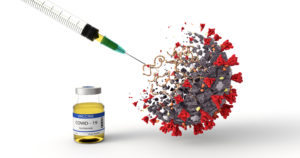
The global spread of COVID-19 has challenged scientists to accelerate research and development in the race to find a safe and effective vaccine against SARS-CoV-2. Among the front-runners are the mRNA vaccines developed by Pfizer and its German partner BioNTech and by Moderna Therapeutics and the National Institutes of Health.
On 9 December 2020, Health Canada authorized use of the Pfizer-BioNTech vaccine for people who are 16 years of age or older under the Interim Order Respecting the Importation, Sale and Advertising of Drugs for Use in Relation to COVID-19 (the “Interim Order”). Canada was the third country to approve the Pfizer-BioNTech vaccine, following Bahrain and the United Kingdom. Subsequently, the United States and the European Union also approved the Pfizer-BioNTech vaccine.
On 23 December 2020, Health Canada authorized use of the Moderna vaccine for people who are 18 years of age or older under the Interim Order. Canada was the second country in the world to approve the Moderna vaccine, following only the United States’ approval on 18 December 2020.
mRNA vaccines are a brand new class of vaccines and will likely revolutionize the future of vaccine science. Prior to the Pfizer-BioNTech vaccine and the Moderna vaccine, mRNA vaccines had not been validated for human use. Development of the foundational enabling technology for mRNA vaccines began years ago and Canadian IP has played and continues to play a pivotal role in fueling the development of this exciting new class of vaccines.
mRNA Vaccine Technology
mRNA vaccines contain a synthetic RNA construct that is programmed to encode specific protein(s) that mimic the target viral protein(s). Once the synthetic RNA construct enters into the cytoplasm of a cell, the cell uses the construct as a template to make multiple copies of the encoded protein(s). The body then responds to the encoded protein(s) by generating antibodies and/or cytotoxic T lymphocytes (“CTL”) directed against them. As Health Canada explains, the synthetic RNA construct essentially functions as a “recipe, telling the cells of the body how to make [certain] protein(s) [to trigger an immune response].” Because RNA does not integrate into chromosomal DNA of human cells, mRNA vaccines eliminate the potential safety concerns relating to insertional mutagenesis associated with DNA vaccines.
The Pfizer-BioNTech vaccine and the Moderna vaccine are the first-ever mRNA vaccines to receive regulatory approval for human use. However, the development of mRNA vaccines that culminates in their success began decades ago. For example, as early as 1990, intramuscular injection of RNA expression vectors was shown to induce production of targeted proteins in muscle cells. In 1993, a liposome-entrapped mRNA vaccine in mice was shown to induce a virus-specific CTL (immune) response. After years of advanced research, various mRNA vaccine platforms have been developed to render a synthetic RNA construct more translatable, stable, and non-toxic. Also, previous studies of SARS-CoV and MERS-CoV, which belong to the same cluster of betacoronoviruses as SARS-CoV-2, have paved the way for COVID-19 mRNA vaccine technology.
The full genome sequence of SARS-CoV-2 is understood to encode four major structural proteins: spike, membrane, nucleocapsid, and envelope. The spike protein functions to allow the virus to dock to the host cell and fuse membranes. The spike protein has been an important target for antibody neutralization and vaccine development. Both the Pfizer vaccine and the Moderna vaccine contain synthetic RNA programmed to encode specific antigens that mimic certain epitopes (antibody binding sites) of the spike protein to trigger an immune response.
mRNA vaccines will likely change the future of vaccine science. For one thing, the mRNA vaccine manufacturing process is essentially chemistry-based. Once the full genomic sequence of a virus is available, candidate mRNA vaccines can be designed and synthesized in a few days, rather than months (as it is in the case of a conventional vaccine containing viral proteins or disabled forms of the virus). For context, Moderna finalized the sequence for its mRNA-1273 vaccine within mere days of Chinese scientists having published the genomic sequence of SARS-CoV-2. Two months later, Moderna started a safety phase I clinical trial to test its mRNA vaccine.
Additionally, mRNA vaccines are modular in nature and sequence-based. Theoretically, mRNA vaccines can be designed to encode any protein(s) to thereby quickly respond to a plethora of medical conditions and future pandemics. The flexibility to encode any protein(s) is potentially important to deal with new variants, e.g. mutated variants now coming out of the United Kingdom and South Africa or which may arise in future. Once the genomic sequence of a variant is known, candidate mRNA can be readily modified, although safety and efficacy testing likely remains necessary.
Novel mRNA Vaccine IP: Multiple Layers, Multiple Players, and Some Canadian Connection
Pfizer-BioNTech and Moderna are probably on track to obtain broad IP protection for their specific synthetic mRNA constructs and use of their vaccines. However, the mRNA vaccine patent landscape is likely to involve multiple layers and multiple players, as development of the foundational enabling technology began years ago.
For example, Vancouver-based Acuitas Therapeutics licensed its lipid nanoparticle delivery system in the development of the Pfizer-BioNTech vaccine. The lipid nanoparticle system enables reliable delivery of the synthetic mRNA construct(s) to the interior of target cells. The lipid nanoparticle system stems from research pioneered by Dr. Pieter Cullis and colleagues at the University of British Columbia.
Another company that holds rights that are potentially relevant to the mRNA vaccine arena is Arbutus Biopharma Corp., a Canadian biopharmaceutical company with expertise in liposomal drug delivery and RNA interference. Moderna previously licensed lipid nanoparticle technology held by Arbutus through Acuitas, and more recently, Moderna has been tied up in some administrative proceedings in the US in which it has challenged Arbutus’ patents. While there is no litigation between the two and no allegation that Moderna’s COVID-19 vaccine infringes Arbutus’ patent rights, at the very least in the early days of its development, Moderna also looked to Canadian technology to enable the delivery of mRNA vaccines.
In a further Canadian connection, CanSino Biologics Inc., a Chinese vaccine company, earlier this year partnered with Vancouver-based Precision Nanosystems to purportedly develop another mRNA vaccine. CanSino owns Chinese Patent No. CN 111218459 relating to Ad5-nCo, a COVID-19 vaccine that is based on human type 5 replication defective adenovirus. The fact that it has partnered with another company to also potentially develop an mRNA-based vaccine suggests it sees the value of this new technology.
It will be interesting to watch the mRNA vaccine patent landscape and assess the scope of Pfizer-BioNTech’s and Moderna’s patent protection for their COVID-19 vaccines. At least some of Pfizer-BioNTech and Moderna’s patent applications relating to their COVID-19 mRNA vaccines may have been filed less than 18 months ago and have not yet been laid open for public viewing. For now, one of Moderna’s patent families, including PCT application WO 2017/070626 may provide some insight into its mRNA vaccines. This patent family relates to respiratory virus RNA vaccines and methods of using the vaccines. Two of BioNTech’s patent families may provide some insight into the Pfizer-BioNTech vaccine. A first patent family includes PCT applications WO 2016/045732 and WO 2016/046060, which relate to aaqueous lipid and/or liposome formulations with an increased chemical stability that can be used to deliver compounds including mRNA. A second patent family includes PCT applications WO 2017/059902 and WO 2017/060314, which relate to stabilization of mRNA and an increase in mRNA translation.
Some Concluding Remarks
The COVID-19 experience shows the potential for collaboration among governments and private companies that aim to develop vaccines at lightening-fast speed. IP protection, including patent rights, would be a helpful tool to facilitate such collaboration to tackle other diseases and encourage innovation and investment in this area. It is also important to consider the intersection between public health and patent protection to ensure that IP rights do not become a barrier to innovation and access to affordable medical products.
**This article was originally published by The Lawyer’s Daily (www.thelawyersdaily.ca) a division of LexisNexis Canada Inc.
CIPO and EPO Make PPH Program Permanent
The Canadian Intellectual Property Office (the “CIPO”) and the European Patent Office (the “EPO”) have announced that their pilot Patent Prosecution Highway (the “PPH”) program has become permanent effective 6 January 2021. The PPH program allows applicants prosecuting a patent application at the EPO or the CIPO to have their application processed faster at the other office if certain requirements are met.
To read the CIPO’s announcement click here. To read the EPO’s announcement click here.
Trademark Modernization Act (2020) to Spur Changes to US Trademark Law

Near the end of 2020, the US passed a $900 billion COVID-19 stimulus bill, which received global news coverage. What received less news coverage was the IP provisions tucked in the 5,593-page bill. The bill includes the Trademark Modernization Act (2020), which was signed into law on 27 December 2020 and will come into force by 27 December 2021. The Modernization Act provides new procedures to challenge pending applications and registrations. Additionally, the Modernization Act will likely impact how trademark cases may be litigated. Some key points are summarized below and more information can be found on the resource page published recently by the United States Patent and Trademark Office (USPTO).
(a) Non-Use Attack
The Modernization Act provides new procedures to allow third parties to file petitions to expunge or re-examine trademark registrations based on non-use. The new procedures aim to remove deadwood from the trademark register. The new procedures are believed to be cheaper and easier to use than the existing cancellation proceedings.
Expungement – between three to ten years after the registration date, a third party may request that the USPTO remove some or all of the listed goods and/or services in a registration because the registrant never used the trademark in commerce.
Re-examination – within five years after the registration date, a third party may request that the USPTO remove some or all goods or services in a registration on the basis that the trademark was not in use in commerce with those goods or services on or before the provided use date.
Cancellation – after three years from the registration date, a third party may request cancellation of a registration if the registered trademark has never been used in commerce. This new cancellation ground is similar to section 45 of Canada’s Trademarks Act allowing a third party to request that a trademark registration be removed from the register if the registrant is unable to show use in Canada during the three-year period preceding the date of a section 45 notice.
(b) Letters of Protest
The Modernization Act provides statutory authority for USPTO’s longstanding letters of protest practice. Third parties may submit registrability-related evidence to the USPTO before an application proceeds to registration. The USPTO indicates that the appropriate grounds include:
- The trademark in the protested application is likely to be confused with a trademark in a U.S. registration or prior pending application.
- The trademark in the protested application is merely descriptive of or generic for the identified goods or services.
- The trademark in the protested application suggests a false connection with the protestor.
- A registered trademark appears in the identification of the goods or services in the protested application.
The USPTO’s letters of protest practice is similar to Canada’s “Notification of Third Party Rights”. The relevant Practice Notice specifies three appropriate grounds:
- The trademark is confusing with a registered trademark under paragraph 12(1)(d) of the Trademarks Act(the Act).
- The applicant is not the person entitled to registration of the trademark in view of paragraph 37(1)(c) of the Act.
- Registered trademark(s) are being used in the application to describe goods or services.
(c) Response periods for Office Actions
The Modernization Act provides statutory authority to the USPTO to set response periods to be shorter than the current six-month time frame but no less than 60 days. Extensions to the full six months may be available, perhaps subject to prescribed fees.
(d) Rebuttable Presumption of Irreparable Harm
Traditionally, injunctive relief was generously granted and irreparable harm was presumed. However, the US Supreme Court decision in eBay Inc. v MercExchange, LLC, 547 US 388 (2006) changed the standard and held that trademark owners had to prove they are entitled to injunctive relief. The Modernization Act deviates from the eBay decision and provides that a trademark owner seeking injunctive relief is entitled to a presumption of irreparable harm and the accused infringer can present evidence to rebut the presumption.
This is in contrast to Canada’s injunctive relief practice. Fox on Canadian Law of Trade-marks and Unfair Competition, an authoritative text on trademark law, suggests that Canadian courts insist on clear evidence that irreparable harm has occurred or, in a quia timet action, will occur, and will ignore speculative evidence of harm.
CIPO Releases Practice Notice to Clarify the Effect of Designated Days on Maintenance Fee Due Dates
The Canadian Intellectual Property Office (CIPO) has released a new practice notice clarifying the effect of the Designated Days on maintenance fee due dates. In 2020, CIPO announced the whole period of March 16 to August 28 inclusive as Designated Days, effectively making all deadlines falling within that period automatically extend until August 31, 2020. In this updated Practice Notice, CIPO clarifies that the Designated Days have no impact on maintenance fee due dates that fall on or after August 31, 2020. The original filing date must be used to determine the subsequent maintenance fee due dates.
Furthermore, if an application had a maintenance fee due date on or before March 13, 2020 and missed the deadline to avoid abandonment by paying the maintenance fee and the late fee during the period of the Designated Days, the deemed abandonment date is August 31, 2020. Similarly, if a patent had a date of deemed expiry on or before March 13, 2020 and the six-month period for reversing that deemed expiry fell within the Designated Days, the start date for the period in which to reverse the deemed expiry is now August 31, 2020. In both cases, the application/patent could be reinstated/have its expiration reversed by August 31, 2021, assuming that the abandonment/expiration happened despite all due care required by the circumstances having been taken.
CHINA’S NEW PATENT LAW TO STRENGTHEN IP PROTECTION

On 17 October 2020, the National People’s Congress Standing Committee approved China’s new patent law, which will come into force on 1 June 2021. This is the fourth time that China’s patent law has undergone significant changes, with previous amendments in 1992, 2000, and 2008. The new law has the potential to strengthen IP protection and encourage globally harmonized practices. Some notable changes include:
- patent term adjustment and extension;
- patent linkage system for pharmaceutical patents;
- portion claiming in industrial design protection (i.e. claiming only certain features of an article for protection);
- increased term for industrial design protection;
- increased statutory damages for infringement; and
- an open-licensing patent system.
Patent Term Adjustment and Extension
Article 42 of China’s new patent law provides (i) patent term adjustment to compensate for unreasonable delays that occur in granting the patent and (ii) patent term extension to compensate for unreasonable delays during pharmaceutical product marketing approvals.
In particular, patent term adjustment may be possible to compensate for unreasonable delays caused by the Chinese National Intellectual Property Administration (“CNIPA”). Also, patent term extension of up to five years may be available for innovative drugs, provided that the patent term does not exceed 14 years after receiving regulatory approval.
Patent term adjustment is not available in Canada but patent term extension of up to two years has been available since 2017 for patents pertaining to new medicinal ingredients or new combinations of medicinal ingredients for human or veterinary use. Canada will have to add provisions relating to patent term adjustment to comply with its obligations under the Canada-US-Mexico Free Trade Agreement.
Patent term adjustment and extension can be particularly important for pharmaceutical patents because it often takes a long time to bring a drug to market.
Patent Linkage System for Pharmaceutical Patents
Article 76 of China’s new patent law adds a patent linkage system for pharmaceutical patents that ties together the granting of regulatory approval with a consideration of patent rights. This Article provides that the CNIPA and the National Medical Products Administration (“CFDA”) will work together to tie the regulatory approval of generic medications to the patent status of the original brand-name product. In particular, the regulatory drug marketing review and approval process may be suspended when there is a dispute about whether a generic version would infringe upon the relevant pharmaceutical patent. Likewise, a generic company may request an administrative ruling from the Patent Administration Department of the State Council on the validity of a pharmaceutical patent.
On 29 October 2020, the Supreme People’s Court issued a draft patent linkage judicial interpretation for comment. The draft interpretation suggests that the Beijing IP Court will have jurisdiction over patent linkage cases even if an administrative proceeding has commenced. The court may consolidate lawsuits involving the same patent or the same generic medication. During a court proceeding, the parties involved are under a duty of confidentiality with respect to trade secrets. Available remedies may include preliminary injunctions and damages.
Portion Claiming in Industrial Design Protection
Article 2(4) clarifies that portion claiming is available for industrial design protection. The wording “the whole or a part of” is added to the definition of design. This adjusts the protectable scope of a design to permit protection for the most interesting features of an article as opposed to the entire article.
Portion claiming has been permitted in many major jurisdictions, including Canada, Europe, Japan, Korea, and the United States, and so this change helps to harmonize design practice in China with the practice in other countries.
Increased Term for Industrial Design Protection
Article 42 increases the term of a Chinese design patent from 10 to 15 years from the filing date. This change prepares China’s IP regime for its accession to the Hague Agreement Concerning the International Registration of Industrial Designs (“Hague System”).
Canada’s industrial design regime underwent similar changes in 2018 to allow Canada to join the Hague System.
Increased Statutory Damages for Infringement
Article 71 includes provisions for punitive damages for intentional patent infringement. The punitive damages will be more than one but less than five times a determined compensatory amount. The compensatory amount may be determined based on either the actual loss suffered by the patentee or the profit gained by the alleged infringer.
Also, Article 71 raises the upper limit of statutory damages for patent infringement from RMB 1,000,000 to RMB 5,000,000. This is to be contrasted with the Canadian system, where statutory damages are not an available remedy for patent infringement.
Open-Licensing Patent System
Articles 50 to 52 introduce an open-licensing patent system to encourage the commercial utilization of patents. Under the open-licensing patent system, a patentee may write to the CNIPA (i) to declare that the patentee is willing to license any entity or individual to exploit the patentee’s patent rights and (ii) to specify the payment method and royalty amount. The CNIPA will then make a public announcement to encourage uptake of the open license. The patentee may withdraw the open license declaration at any time although the withdrawal will not affect the validity of the already granted open license(s).
Concluding Remarks
To implement China’s new patent law, new patent regulations and examination guidelines are currently being drafted. It is an exciting time to monitor the changing landscape of China’s patent regime and plan strategies that take advantage of such changes.
**This article was originally published by The Lawyer’s Daily (www.thelawyersdaily.ca) a division of LexisNexis Canada Inc.
CIPO Announces Expedited Examination for COVID-19 Trademark Applications
The Canadian Intellectual Property Office (CIPO) has issued a Practice Notice to allow expedited examination of certain trademark applications. To ensure Canadians have timely access to COVID-19 related products and services, effective 14 December 2020, CIPO began accepting requests for expedited examination of trademark applications associated with medical goods or services related to COVID-19. The request must be in the form of an affidavit or statutory declaration setting out the circumstances and reasons for the request, including a court action, a counterfeit products issue, or Health Canada approval being sought or obtained. The goods and services in the application must include at least one of pharmaceuticals, medical devices, medical protective equipment, medical services or medical research services, related to the prevention, diagnosis or treatment of COVID-19.
CIPO Releases Practice Notice on Extensions of Time Requests for Patent Applications
The Canadian Intellectual Property Office (CIPO) has released a new practice notice clarifying its practice regarding requests for extensions of time under subsection 3(1) of the Patent Rules. The practice notice clarifies that requests for extensions of time should include an explanation that is specific to the patent application in question and sufficient information for the Commissioner to make an informed decision. Requests that include a simple statement indicating that more time is required to obtain instructions from an applicant will be refused. Some exemplary circumstances that may justify an extension of time include: a recent transfer of rights to the application, a recent change in the appointed patent agent, and health issues impacting the applicant or patent agent.
Federal Court Clarifies Admissibility of Prosecution History Evidence Against Licensees
In Allergan Inc. v. Sandoz Canada Inc., 2020 FC 1189 [Allergan], the Federal Court of Canada ruled that section 53.1 of the Patent Act does not permit litigants to rebut statements as to claim construction made by patent licensees based on communications from the patentee during prosecution of the patent. Rather, section 53.1 can only be invoked to rebut inconsistent statements made by the patentee.
Section 53.1 was recently added to the Canadian Patent Act to preclude patentees from asserting a position during litigation that was inconsistent with their previous statements to the Patent Office. In the present case, the plaintiff Allergan Inc. was an exclusive Canadian licensee of a drug owned by Kissei Pharmaceutical Co. Ltd. (the patentee). The defendant Sandoz Canada Inc. sought to introduce prosecution history evidence of statements made by Kissei. However, such evidence was found inadmissible under the wording of section 53.1 as Allergan was not a “patentee” within the meaning of the Patent Act.
The decision is interesting because it appears to allow the complete circumvention of section 53.1 simply by licensing a patent, and the Court recognized this “mischief” but felt that the words used in the section and the legislative history (including the rejection of a broader version of the wording that would have captured licensees during consultations on the draft legislation) required this interpretation.
A copy of the decision in Allergan is available here. A review of recent Canadian jurisprudence clarifying the scope of section 53.1 is available here.
Congratulations to Nick Garner
Oyen Wiggs congratulates Nick Garner who has become a Partner of the Firm.
Nick Garner is both a patent lawyer and professional engineer with particular expertise in preparing and prosecuting patent applications for inventions within the mechanical arts. Nick’s clients range from individual inventors and start-ups to established companies with a global presence.
He is a Canadian patent lawyer and registered patent and trademark agent with over 14 years’ experience in a variety of technology. He has assisted clients in obtaining patent protection in a variety of industries including manufacturing and construction, marine products, control and sensor systems, consumer products, green technology, aerospace systems, vehicle accessories, and tool assemblies.
get_sidebar();