Copyright Board of Canada Adopts Formal Rules of Procedure for the First Time

On 1 March 2023 the Copyright Board of Canada published and brought into effect the final version of their Rules of Practice and Procedure (the “Rules”).

The Copyright Board, established in 1989, has never before adopted formal rules of procedure. The new Rules aim to increase consistency and predictability for parties involved in tariff and arbitration proceedings as well as to provide reliable directions for participation and a clear understanding of what to expect during the process. This change is expected to make participation in the proceedings more accessible and transparent for both parties and the public.

Key changes to board proceedings which came into effect with the new Rules include:

  1. Collective societies will now be required to provide a detailed Notice of Grounds when filing a proposed tariff. This means that potential users of the proposed tariff will have more information to base their objections on and evaluate their interest in participating in the proceedings. Additionally, detailed information on objections from users will be required in the form of a Notice of Grounds for Objection. By introducing these Notice of Grounds requirements, the Board aims to streamline and improve early information exchange between potential parties, and establish reasonable and transparent timelines for the approval process.
  2. A new Joint Statement of Issues requirement will encourage parties to agree on specific issues to be considered during the proceeding, reducing time and cost for all involved by clearly identifying issues in dispute.
  3. Case management practices have been integrated into most proceedings to assist with clarifying positions, resolving issues, setting next steps, and expediting proceedings. In some proceedings, a formal case manager will be appointed by the Chair of the Board to issue orders, convene conferences, and potentially resolve issues of procedure.
  4. A new process by which a person who is not a collective management society or objector can request to participate in a proceeding as an intervener. The Board will consider whether the person has sufficient interest in the proceedings and whether they can provide useful and different information or submissions, while also avoiding prejudice or interference with the proceeding’s fair and expeditious conduct. Additionally the rules also introduce a process for submitting a letter of comment, which must be provided to all parties, considered as part of the proceeding, and put on the public record.

More information is available here.

Non-Traditional Trademarks in Canada

Most of us are familiar with traditional trademarks comprising words and designs. Many businesses now recognize, however, the growing importance of so-called non-traditional trademarks, which are now registrable pursuant to recent amendments made to the Canadian Trademarks Act (“the Act”)[1] and Trademarks Regulations (“the Regulations”).[2]

What Are Non-Traditional Trademarks?

On June 17th 2019, the definition of “trademark” in the Act was amended to recite “a sign or combination of signs that is used or proposed to be used by a person for the purpose of distinguishing or so as to distinguish their goods or services from those of others”.[3]

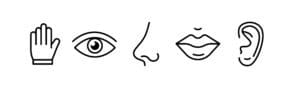
“Sign” is itself defined in the Act as including “a word, a personal name, a design, a letter, a numeral, a colour, a figurative element, a three-dimensional shape, a hologram, a moving image, a mode of packaging goods, a sound, a scent, a taste, a texture and the positioning of a sign”.[4] The types of signs listed after “a numeral” are generally referred to as non-traditional trademarks (“NTTMs”).

More than just a mere legal curiosity, NTTMs can be powerful trademarks. By way of example, Deere & Company (the manufacturer of John Deere tractors) has applied to register green and yellow as a colour trademark (Canadian Application No. 1900062). Grupo Bimbo, S.A.B. de C.V., better known as the manufacturer of the Takis corn snack, has applied to register the 3D shape of a rolled-up taco shell as a three-dimensional shape trademark (Canadian Application No. 1978346). Exxon Mobil Corporation has successfully registered the design of its fuel station canopy as a positioning of a sign trademark (Canadian Registration No. TMA1110283). These examples show that, just like word and design trademarks, NTTMs can be powerful indicators of source that elicit a strong association with particular goods and services.

Applying for and Registering Non-Traditional Trademarks

The Act requires all trademark applications to include “a representation or description, or both, that permits the trademark to be clearly defined and that complies with any prescribed requirements”.[5] The Regulations prescribe requirements for certain types of NTTMs,[6] and the Canadian Trademarks Examination Manual[7] summarizes the application content requirements for NTTMs.

In addition to the above requirements, certain types of NTTMs require proof that the mark is distinctive at the time of filing, namely: colour, 3D shape, mode of packaging goods, sound, scent, taste, and texture trademarks.[8]

Considerations

In addition to the requirements above, there are a number of potential issues and considerations associated with NTTMs.

Demonstrating Use of NTTMs for Goods

The first issue is proving use for NTTMs. The concept of “use” appears throughout the Act. For example, section 19 grants owners of registered trademarks the exclusive right to use that trademark throughout Canada in respect of its goods and services.[9] Furthermore, initiating a section 45 proceeding requires the registrant to prove use of the impugned trademark.[10]

The Act contains a deeming provision for use of a trademark in association with goods, stipulating that a trademark is deemed to be used in association with goods if “at the time of the transfer of the property in or possession of the goods… it is marked on the goods themselves or on the packages in which they are distributed or it is in any other manner so associated with the goods”.[11]

However, this deeming provision is less helpful for certain types of NTTMs. For example, taste and scent trademarks cannot be “marked on” the goods or their packaging, like traditional trademarks. Deemed use can therefore only be shown if the scent or taste is “associated with” the goods at the time of transfer. Many types of goods cannot be smelled prior to purchasing or taking possession of them, and it is rare that goods can be tasted at that time, so one may not be able to associate taste and/or smell with a particular good at the time of purchase or transfer of possession. Proving use in association with goods for certain types of NTTMs is therefore a potential point of uncertainty.

Demonstrating Distinctiveness

The second potential problem associated with NTTMs is proving distinctiveness. In certain circumstances, the Act requires proof that a trademark was distinctive at the time the application was filed.[12] There are two kinds of distinctiveness under Canadian trademark law: inherent distinctiveness, and acquired distinctiveness (also called distinctiveness through use or secondary meaning).

With respect to NTTMs specifically, paragraphs 32(1)(c) and (d) of the Act require an applicant to submit any evidence required by an examiner to prove that their NTTM has acquired distinctiveness at the date the application was filed. For the NTTMs to which paras. 32(1)(c) and (d) apply, applicants are not able to argue that their NTTM is inherently distinctive to overcome the requirement to submit evidence, and must therefore provide enough evidence to prove acquired distinctiveness. This may be difficult for owners of NTTMs that haven’t used their NTTM enough to acquire distinctiveness.

The Registrability of Certain Types of NTTMs

In addition to the above considerations, it is also an open question whether taste and smell trademarks are even registrable.

Pursuant to s. 12(2) of the Act, a trademark is not registrable if “its features are dictated primarily for a utilitarian function”.[13] Based on applications submitted to the Canadian Intellectual Property Office (CIPO) thus far, the food and beverage industry appears to be particularly interested in taste and smell trademarks. A strong argument could be made that taste and smell trademarks, specifically in association with goods that can be consumed, are nearly always utilitarian features of those goods and therefore not registrable.

CIPO’s stance on the registrability of taste and smell trademarks remains to be seen, as very few taste or smell trademarks have been examined as of the date of writing this article. Looking to the USA though, there is a heavy burden placed on applicants wanting to register taste and scent trademarks. The US Trademark Manual of Examining Procedure states that “(t)he amount of evidence required to establish that a scent or fragrance functions as a mark is substantial” and that “just as with a scent or fragrance, a flavor can never be inherently distinctive because it is generally seen as a characteristic of the goods”.[14] Should CIPO and/or Canadian courts take a similar position, it will be difficult for owners of these types of NTTMs to register their marks.

NTTMs have the potential to form part of a novel and valuable branding strategy. Given the recent changes to the law surrounding NTTMs though, their path to registration and the mechanics of their enforcement and protection remains to be seen.

[1] Trademarks Act, RSC 1985, c T-13.
[2] Trademarks Regulations, SOR/2018-227.
[3] Trademarks Act, RSC 1985, c T-13, s 2.
[4] Ibid.
[5] Trademarks Act, RSC 1985, c T-13, s 30(2)(c).
[6] Trademarks Regulations, SOR/2018-227, s 30.
[7] Canada, Canadian Intellectual Property Office, Trademarks Examination Manual, 2.4.10 Non-traditional trademarks.
[8] Trademarks Act, RSC 1985, c T-13, s 32(1)(c) and (d).
[9] Trademarks Act, RSC 1985, c T-13, s 19.
[10] Trademarks Act, RSC 1985, c T-13, s 45.
[11] Trademarks Act, RSC 1985, c T-13, s 4(1).
[12] Trademarks Act, RSC 1985, c T-13, s 32.
[13] Trademarks Act, RSC 1985, c T-13, s 12(2).
[14] United States. Patent and Trademark Office, Trademark Manual of Examining Procedure (TMEP), 1202.13 Scent, Fragrance, or Flavor.

An Overview of European Unitary Patents and the Unified Patent Court

Starting this year, a new agreement called the Unified Patent Court Agreement (the “UPCA”) is coming to Europe. 17 countries have already agreed to it, and others may join soon. This system brings two big changes:

  1. You can get a new type of patent that covers all countries which have joined the UPCA called a Unitary Patent.
  2. You can use a new court called the Unified Patent Court (the “UPC”) to settle patent disputes at one single time for all of the countries which have joined the UPCA. Currently, patent disputes must be separately litigated in each country of interest.

The 17 countries which have joined the UPCA are: Austria, Belgium, Bulgaria, Denmark, Estonia, Finland, France, Germany, Italy, Latvia, Lithuania, Luxembourg, Malta, the Netherlands, Portugal, Slovenia, and Sweden (shown in green on the map below).

Countries which are eligible to join the UPCA are: Cyprus, Czech Republic, Greece, Hungary, Ireland, Poland, Romania, Slovakia, Croatia and Spain (shown in red on the map below).
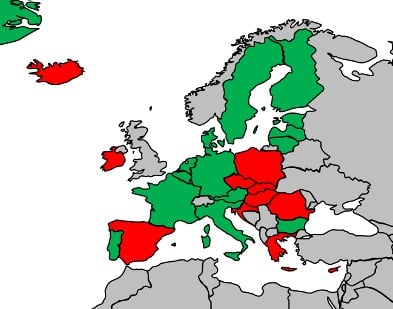
A map of Countries which are eligible to join the UPCA. Countries shown in green have joined the UPCA, countries shown in red are eligible to join.

Unitary Patents

Unitary Patents will cover all of the countries that have joined the UPCA at the time the patent is granted, and all disputes surrounding a Unitary Patent must be brought in the UPC. The countries in which a Unitary Patent offers protection will remain the same for the life of the Unitary Patent, even as more countries join the UPCA. This means that there will be successive ‘generations’ of Unitary Patents which offer protection in different countries as more countries join the UPCA.

The benefits of a Unitary Patent include only having to pay one official fee to obtain protection in all of the countries that are part of the UPCA as well as only paying a single maintenance fee each year to maintain protection instead of paying fees to each country independently. Further, you will be able to enforce your patent rights centrally rather than having to fight infringers in multiple national courts. However, Unitary Patents could also cost you more, generally in situations where you are only interested in patent protection in a few countries, and there is a risk of losing your patent rights in all of the countries who are part of the UPCA at once from a single lawsuit if the Unitary Patent is invalidated.

Are Unitary Patents Right for Me?

This will be a case by case decision for each patent application. Competing factors will likely be potential cost savings and the ability to enforce patent rights from a single court, balanced against the risk of losing patent protection in all UPCA countries in a single lawsuit as well as the risks associated with using a new and untested court. Generally, Unitary Patents may be of interest if you are cost conscious, if you anticipate needing to enforce your patent through lawsuits across multiple UPCA countries, or if you are interested in being part of forming precedents in the new court.

Unified Patent Court

The UPC will hear patent disputes relating to European Patents as they relate to parties covered by the UPCA and Unitary Patents. By default all European Patents will be subject to the jurisdiction of the UPC. However, you can opt a European Patent out if the European Patent has not been litigated at the UPC, and you may opt back in after opting out if the European Patent has not been litigated in any national courts. If you opt back in, the patent will be subject to the UPC for the remainder of the patent’s life as you may only opt out once. There will not be any official fees for opting in or out, although attorney fees will be incurred. Opt-outs will not be possible for Unitary Patents.

Decisions made by the UPC will be binding on all of the countries who have joined the UPCA. Similar to Unitary Patents, the benefit of using the UPC is the ability to enforce your patent rights centrally which in many circumstances will be significantly cheaper than enforcing in individual countries. Further, the same risk as with Unitary Patents exists of losing patent rights in all UPCA countries from a single lawsuit, as any decision invalidating the European Patent will have effect in all UPCA member states.

Is the Unified Patent Court Right for Me?

This will also be a case by case decision, however due to the ability to opt out and back in we anticipate that in most cases it will be advantageous to opt out to avoid the risk of having your patent invalidated in all UPCA countries at once, and only opting back in if you find yourself in a situation where it might be advantageous to use the UPC to enforce your patent rights. A caveat to this approach is that you will not be able to opt back into the UPC if litigation involving the European Patent has been commenced in a national court.

Timeline
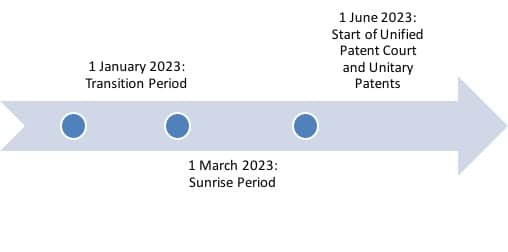
A chart showing the Timeline of Unitary Patnets

Transition Period (1 January 2023 – 1 June 2023)

As of 1 January 2023 we entered into the “Transition Period” where you may delay the grant of a European patent application so that it will grant as a Unitary Patent on 1 June 2023 instead of as a European Patent.

Sunrise Period (1 March 2023 – 1 June 2023)

Starting on 1 March 2023 you will be able to opt-out your European Patents and applications from the jurisdiction of the Unified Patent Court. By default, all current and future European applications and patents will be subject to the UPC. After 1 June 2023 opt-outs will only be possible for patents which have not been litigated in the UPC. Opt-outs will not be possible for Unitary Patents.

UPCA Enters into Force (1 June 2023)

Starting on 1 June 2023 Unitary Patents will begin to be issued and the Unitary Patent Court will start hearing cases.

What Does This Mean for Me?

(i) Pending European Patent Applications

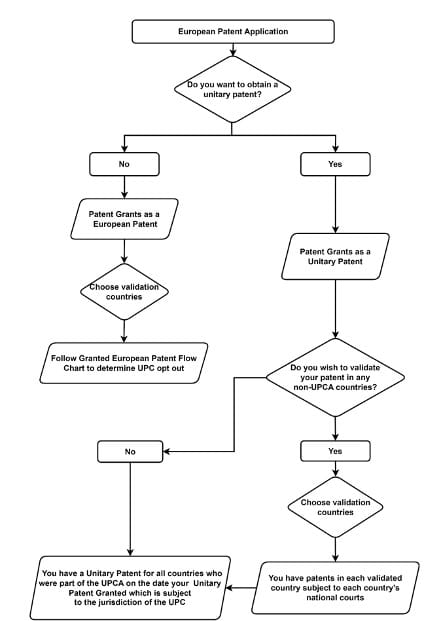
If you have a pending European patent application, you will need to first decide if you wish to have the patent grant as a Unitary Patent, or if you wish to separately validate the patent in each UPCA country where you want protection as per the current procedure. Separate validation will still be required in any countries that are not parties to the UPCA. If you wish to validate in a number of countries that are parties to the UPCA, it will be less expensive to proceed with a Unitary Patent than following the current independent validation procedure.

If you follow the Unitary Patent route, that will be the end of the decision making process, and the Unitary Patent will be subject to the central jurisdiction of the UPC. If you opt to follow the traditional validation procedures in countries that are party to the UPCA, then you will still need to decide if you want that European patent to be subject to the jurisdiction of the UPC, or if you wish to opt that European patent out of the jurisdiction of the UPC.

(ii) Granted European Patents

For granted European patents, maintenance fees will continue to be payable in each country where the patent was validated. However, you must still decide for each European patent whether to opt that patent out of the jurisdiction of the UPC or not. If you take no action, the patent will be subject to the jurisdiction of the UPC, and can later be opted out only if no action has been commenced in respect of that patent. Keep in mind that if you choose to opt the patent out of the jurisdiction of the UPC, you can choose to later opt back in, as long as no action has been commenced in a national court in respect of that patent.

(iii) Future Exclusive Jurisdiction of the Unified Patent Court

The member states of the UPCA have agreed that the UPC will eventually gain exclusive jurisdiction over both European Patents and Unitary Patents. Currently the earliest date that this could occur is 7 years from the commencement of the UPC, 1 June 2030; however, this may be delayed an additional 7 years to 1 June 2037. Once the UPC has exclusive jurisdiction over both European Patents and Unitary Patents there will no longer be the option to opt European Patents out of the jurisdiction of the UPC.

Unified Patent Court Agreement Frequently Asked Questions

What is a Unitary Patent?

A Unitary Patent is a European patent which will be effective across 17 countries currently, with more likely to join.

What is the Unified Patent Court?

The Unified Patent Court is a new European court which will issue decisions relating to Unitary Patents and European Patents.

When will the Unitary Patent and Unified Patent Court begin?

1 June 2023

How do I obtain a Unitary Patent?

As of 1 January 2023 applicants have been able to make early requests for Unitary Patents and request a delay of the grant of their applications until 1 June 2023 in order to obtain Unitary Patents. Starting 1 June 2023 applicants will be able to simply request a Unitary Patent instead of a European Patent upon grant.

Why might I want a Unitary Patent instead of a European Patent?

A Unitary Patent will be cheaper in some circumstances, generally where an applicant is seeking protection in multiple countries covered by the UPCA.

Why might I not want a Unitary Patent?

Unitary Patents will have a risk of being invalidated in all of the countries they are effective in at once through a single lawsuit.

Why might I want to use the Unified Patent Court?

The Unified Patent Court will offer the ability to enforce patents across at least 17 countries using a single lawsuit.

Why might I not want to use the Unified Patent Court?

The Unified Patent Court will have a risk of allowing any patent litigated at the Unified Patent Court to be invalidated in all of the UPCA countries they are effective in at once through a single lawsuit.

Decision Trees of choices relating to the Unitary Patent and Unified Patent Court:
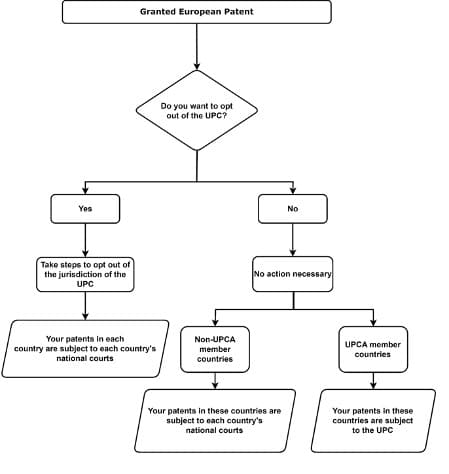
 

Decision Trees of choices relating to the Unitary Patent and Unified Patent Court.


US Copyright Office Denies Registration of AI Generated Art

The US Copyright Office has limited a copyright registration for a comic book titled “Zarya of the Dawn” (the “Work”) authored by Kristina Kashtanova containing images generated with Midjourney (an AI image generator).

Kashtanova had applied for and been granted a copyright registration for the Work with the US Copyright Office. After obtaining a copyright registration, the Office sought to cancel the registration on the basis that “the information in [the] application was incorrect or, at a minimum, substantively incomplete” after becoming aware of Kashtanova’s use of Midjourney as part of the creation of the Work.

In a letter to Kashtanova’s counsel, the Office stated that Kashtanova was entitled to copyright registration for “the Work’s text as well as the selection, coordination, and arrangement of the Work’s written and visual elements”. The Office noted, however, that Kashtanova was not entitled to copyright registration for the images in the Work as the images were “not the product of human authorship” and thus could not be protected by copyright.

According to the Compendium of U.S. Copyright Office Practices (3d ed. 2021), the Office currently takes the position that it “will not register works produced by a machine or mere mechanical process that operates randomly or automatically without any creative input or intervention from a human author” (at §313.2). The Office noted that the unpredictable output of the Midjourney algorithm meant that Kashtanova lacked sufficient control over the images to be an author, stating that “because Midjourney starts with randomly generated noise that evolves into a final image, there is no guarantee that a particular prompt will generate any particular visual output.”

The US Copyright Office issued a new, more limited registration for the Work expressly excluding “artwork generated by artificial intelligence”.

This decision from the US Copyright Office is one of the first addressing the intersection of copyright and algorithmically generated art, and provides interesting insight on the US Government’s position on such works. It remains to be seen how Canadian copyright law will respond to AI generated art. In the meantime, users of AI platforms should be mindful of the uncertain copyright implications associated with AI.

More information is available here.

Oyen Wiggs Lawyers Recognized in Lexpert Ranking

Oyen Wiggs is proud to announce the recognition of five of its lawyers,  David McGruder, Thomas Bailey, Gavin Manning, Jennifer Marles, and Hilton Sue as leading lawyers in the area of intellectual property in the 2023 Canadian Legal Lexpert® Directory.

The firm was also recognized as a leading law firm in the areas of Intellectual Property and Computer and IT Law.

The Canadian Legal Lexpert® Directory, published since 1997, is based on an extensive peer survey process.  It includes profiles of leading practitioners across Canada in more than 60 practice areas and leading law firms in more than 40 practice areas.

WIPO invites applicants for 2023 Global Awards

The World Intellectual Property Office (the “WIPO”) has opened its 2023 Global Awards program. The program seeks small and medium sized enterprises that use intellectual property in an exceptional manner to achieve business goals and better society.

Winners receive a tailored mentoring package to support IP strategies. The package may include funding facilitation, partnership opportunities and publicity support.

You can learn more about the 2023 Global Awards program here and here.


New study proposes using brain scans to assist in assessing confusion between trademarks

A recently published study suggests that brain scans could be used as evidence in trademark infringement cases.

In Canada, a finding of trademark infringement requires that the infringing mark be confusingly similar to a registered trademark.  Confusion is assessed having regard to a number of factors, an important one of which is the degree of resemblance between the trademarks.

The study used repetition suppression in the brain to assess degree of resemblance. Repetition suppression is the weakening of the brain’s response to repeated stimulus.  In the study, participants were shown images of a target brand and a copycat brand while MRI scanners monitored activity in the visual processing areas of the brain. The expectation was that marks with a high degree of resemblance would show the highest amount of reduction in response, while dissimilar marks would show a minimum amount of reduction in response.  The results were then compared to survey results that were either neutral, biased towards the plaintiff, or biased towards the defendant.  It was found that the scans tended to align more with the neutral survey results.

While the scans may provide a useful measurement of the degree of resemblance between marks, that remains only one of the factors in assessing confusion and thus will not automatically lead to a finding of infringement.  Brain scans are also more expensive to implement than the consumer surveys that are widely used in infringement cases.

The study was originally reported here.  The published study itself may be found here.

Getty Images Accuses Stability AI, Inc. of Infringing its Intellectual Property Rights in New Lawsuit

On 3 February 2023, Getty Images filed a lawsuit in the US against Stability AI, Inc., the company responsible for the text-to-image AI image-generating platform Stable Diffusion. Getty alleges that Stability infringed Getty’s intellectual property rights including its copyright, by using Getty’s images to train the AI platform without permission, and its trademarks, by reproducing Getty’s watermark (or modified versions of the watermark) in images created using the platform. Getty seeks an order for Stability to stop using its images and further seeks monetary damages for the alleged infringement.

Notably, a similar lawsuit was also filed in January of this year in the United Kingdom.

Read more about the US lawsuit, Getty Images (US), Inc. v. Stability AI, Inc., U.S. District Court for the District of Delaware, here.

Oyen Wiggs Sponsors Session at the 8th Annual Life Sciences BC Access to Innovation Conference

Graphic promoting the 2023 BC Life Sciences Access to Innovation Event.

Oyen Wiggs is thrilled to sponsor a session at the Life Sciences BC 8th Annual Access to Innovation conference which will be held on February 23rd in the Vancouver Convention Centre West. This event brings together life sciences leaders from academia, research, health institutions, government, and industry to discuss emerging trends, innovation, and economic impact to advance the sector.

Our very own Jennifer Marles, will be a moderator of the panel discussion, Navigating Government Support of IP Strategies.

Find out more and register for the event here.

Scam Alert: Spoofed Calls Impersonating USPTO Employees

For years, many companies or entities sent unsolicited invoices and notices to trademark owners requesting payment of fees for various services including publications or listings in a register or database.  Many of these solicitations are scams and these entities are either not authorized to practice in the trademark field or are misleading owners into believing that they must pay those fees in order to maintain their rights in the applications or registrations.

It appears that these scam attempts have evolved from letters or emails to now phone calls to the trademark owners.  The United States Patent and Trademark office (USPTO) recently became aware and has warned users and their staff that the scammers are targeting trademark owners through calls that “spoof” USPTO’s phone numbers and posing as an USPTO employee.

How to spot a spoofed phone call: USPTO noted that they will never ask for personal information or payment information over the phone and if unsure, to hang up the phone and contact the Trademark Assistance Centre.

We recommend our clients ignore such notices, invoices or phone calls and to contact us in case of any uncertainty.

get_sidebar();