CIPO Announces Full Launch of MyCIPO Patents and Canadian Patents Database Service Interruption

On 1 October 2024, CIPO announced the availability of full access to MyCIPO Patents. The full rollout is intended to streamline the online filing process with CIPO.

MyCIPO Patents was initially launched on 17 July 2024, albeit with limited functionality. For example, when initially released, MyCIPO Patents only allowed for the filing of Patent Cooperation Treaty national phase entry applications and the payment of maintenance fees.

Up-to-date information about the rollout of MyCIPO Patents is available here.

In related news, CIPO will be conducting an update to the Canadian Patent Database on the Canadian Thanksgiving long weekend (12 October 2024 to 14 October 2024). The update is expected to address issues with searching functionality on the database.

Federal Court of Appeal dismisses appeal of patent validity rulings in herbicide case

The Federal Court of Appeal recently released a decision (Agracity Crop v. Upl Na Inc., 2024 FCA 133) dismissing an appeal by Agracity Crop & Nutrition Ltd. (“Agracity”). The Federal Court had ruled that claims of Canadian Patent No. 2,346,021 (the “’021 Patent”) were not invalid and were infringed by Agracity. Agracity appealed the Federal Court’s ruling on invalidity based on anticipation and obviousness.

The ‘021 Patent was directed to flucarbazone sodium as a selective herbicide (i.e. a herbicide that targets weeds only with minimal injury to the surrounding crop). Prior publications Canadian Patent No. 2,064,636 (the “’636 Patent”) and its corresponding U.S. patent disclosed flucarbazone sodium as a herbicide, but not as a selective herbicide.

On appeal, Agracity argued that the Federal Court misapplied the legal test for anticipation, namely that the ‘636 patent both disclosed and enabled the invention claimed in the ‘021 Patent. Agracity disputed that flucarbazone sodium was unknown as a selective herbicide, as portions of the ‘636 Patent stated that substances “contemplated therein ‘act as total or selective herbicides depend[ing] essentially on the amount used’” and that certain compounds encompassing flucarbazone sodium were “suitable for the selective control of certain weeds in certain crops”.

The Court of Appeal disagreed, stating that the ‘636 Patent did not indicate that flucarbazone sodium was among the herbicides with selective properties, and that the compounds of the ‘021 Patent were selective due to chemical structure, as opposed to the amount used as disclosed in the ‘636 Patent. Accordingly, the Court of Appeal agreed with the Federal Court that the prior publications did not disclose subject matter that if performed would necessarily result in infringement of the ‘021 Patent and thus did not meet the disclosure requirement of the test for anticipation.

On obviousness, Agracity argued that the Federal Court improperly considered the inventive concept as a whole, and not of the claims individually, and also improperly imported elements of the anticipation analysis into the obviousness analysis. The Court of Appeal held that these arguments were not supported by a fair reading of the Federal Court’s decision and dismissed these arguments as well.

The decision is reported here.

The Canadian Intellectual Property Office publishes New Specificity Guidelines for Goods and Services

In continuing its efforts to eliminate the backlog in examination of new trademark applications, the Canadian Intellectual Property Office (CIPO) has released new Specificity Guidelines for Good and Services. As the CIPO notes, the guidelines are meant “to provide an indication of the level of specificity required by the Registrar for certain types of goods and services”.

These guidelines will be useful for stakeholders and trademark professionals when drafting statement of goods and services for new applications since examination of trademark applications using pre-approved goods and service (or goods and services considered to be similar with the pre-approved goods and services) is accelerated.

Similarly, these guidelines will be useful for stakeholders and trademark professionals for responding to Examiner’s Reports with objections to the statement of goods and services.


CIPO Formalizes Updated Refusal and Review Process for Industrial Design Examination Decisions

The Canadian Intellectual Property Office (CIPO) recently announced that following public consultation and a pilot project, it has formalized its updated practice regarding industrial design examination decisions. Specifically, the CIPO’s updated practice involves referring decisions to refuse registration for review by a subject-matter expert from the Trademarks and Industrial Designs Branch (TIDB) rather than by the Patent Appeal Board (as was the case under previous practice). Additionally, the change is accompanied by a change in correspondence wherein a Notice of Possible Refusal is replaced by a Final Examination Report.

The CIPO notes that as of 7 August 2024, all reviews of industrial design examiner decisions will be conducted by a subject-matter expert from the TIDB, as was the case during the CIPO’s pilot project.

For more details about the CIPO’s updated practice for industrial design examination decisions, see the CIPO’s webpage and Section 18 of the CIPO’s Industrial Design Office Practice Manual.

Federal Court Decision Highlights Importance of Establishing Clear Understanding of Patent Agent-Client Relationship

The Federal Court recently issued a decision in the case of Olkowski v. College of Patent Agents and Trademark Agents.

Mr. Andrew Olkowski applied for judicial review in the Federal Court of a decision of the Investigations Committee of the College of Patent Agents and Trademark Agents (“CPATA”). Mr. Olkowski had made a complaint against an Alberta lawyer and patent agent to the Investigations Committee of the CPATA. Mr. Olkowski alleged that he had lost control of a Canadian patent application of which he was one of the co-inventors due to the patent agent’s negligence and breach of fiduciary duties. However, after investigation, the Investigations Committee concluded that the evidence did not support Mr. Olkowski being a client of the patent agent, or that the patent agent owed Mr. Olkowski duties as if he were a client.

On judicial review, the Federal Court was not persuaded by Mr. Olkowski’s arguments and held that the decision reached by the Investigations Committee was reasonable. This case highlights the importance of establishing a clear understanding of the patent agent and client relationship.

Best Lawyers 2025

Oyen Wiggs is pleased to announce that seven of our lawyers have been selected by their peers for inclusion in the 2025 edition of Best Lawyers in Canada in the field of intellectual property law.

Best Lawyers is considered to be the leading peer-review publication in the legal profession. Its rankings of lawyers and firms are based on extensive peer-review surveys in which thousands of leading lawyers confidentially evaluate their professional peers.

We proudly announce that the following lawyers have been recognized as Best Lawyers in Canada for 2025.  We also want to acknowledge Gavin Manning, a “Lawyer of the Year” recipient for 2025.

Thomas Bailey (2010)

George Kondor, KC (2014)

Gavin Manning (2006)

David McGruder (2008)

Todd Rattray (2011)

Paul Smith (2006)

Hilton Sue (2010)

(Year)  First year the lawyer was listed in the published practice area.

Federal Court Cautions Against Strategic Presentation of Evidence in Summary Trials

The Federal Court of Appeal (“FCA”) recently issued a decision in the case of Mud Engineering Inc. v Secure Energy Services Inc. 

Mud Engineering moved for a summary trial in the Federal Court to determine ownership of a patent at issue in a pending infringement action. The Federal Court found the evidence at the summary trial insufficient to declare ownership in favour of Mud Engineering. Notably, Mud Engineering relied solely on lay affidavit evidence which was found to include expert evidence, untranslated foreign language evidence, hearsay evidence, irrelevant evidence, and matters covered by settlement privilege – all of which was excluded by the court.

On appeal, the FCA was of the view that Mud Engineering was effectively asking to reweigh the evidence before the Federal Court and re-do the Federal Court’s findings on factually suffused questions of mixed fact and law. The FCA refused to do so and added a strongly worded reminder to litigants:

Summary trials are not a time for parties to engage in strategic behaviour as far as the evidence is concerned. They are not a time to hold back evidence for later. Instead, the parties must put their best foot forward. If there are evidentiary shortcomings in a party’s case in the summary trial, that party may well lose.

This case should remind litigants to carefully consider the risks of cutting costs in preparing evidence for summary trials.

Federal Court Addresses Section 45 Notices Not Received by Registered Owner

Smooth Payment Inc. v. Klarna Bank Ab, 2024 FC 1274 is a recent decision from the Federal Court involving a Section 45 notice that was never received by the registered owner.

On 6 December 2022, at the request of Klarna Bank Ab, the Registrar of Trademarks issued four Section 45 notices against four trademark registrations that SPI did not respond to the Section 45 notices and consequently the Registrar sent a notice to SPI stating that they would expunge the registrations.

SPI appealed the decision and introduced evidence that SPI’s trademark agent never received the Section 45 notices that the Registrar issued.

Citing Arbour Recycled Products v Canada (Attorney General), 2010 FC 925, [Arbour] the Court acknowledged that trademark registrants are permitted to adduce new evidence on appeal even if no evidence was filed in response to a Section 45 notice.

The Court reviewed evidence submitted by SPI purporting to show use of the four trademarks. Ultimately, the Court expunged two of SPI’s trademark registrations, maintained one, and partially expunged the fourth trademark registration.

The case is a reminder to trademark agents and trademark registrants of the potential significant consequences of failing to receive and respond to a Section 45 notice.

OWGM welcomes back Alexandria Giesbrecht

We are pleased to welcome back Alexandria (Lexi) Giesbrecht, who has rejoined the firm as an articling student. Lexi first became part of the Oyen Wiggs family as a summer student in 2022, and we couldn’t be more delighted to have her with us again to complete her articles.

Federal Court Considers Sufficiency of Evidence under Section 45 of the Trademarks Act

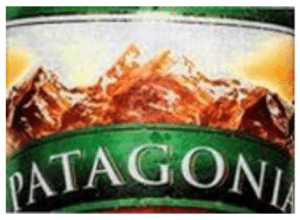
In Patagonia, Inc. v. Labatt Brewing Company Limited, the Federal Court reviewed a decision of the Registrar regarding whether Labatt had submitted sufficient evidence of use of its “PATAGONIA” trademark under Section 45 of the Trademarks Act. A key issue was the cropped label of Patagonia beer submitted by Labatt.

Patagonia Inc. contested the Registrar’s acceptance of the cropped label, claiming that it could have left out crucial words or symbols that might influence how the public views the trademark, and suggesting that any such omission might have been intentional. However, the Court found this argument to be speculative and agreed with the Registrar’s view that the cropped label, coupled with other evidence such as sales receipts, was adequate to demonstrate use of the “PATAGONIA” mark by Labatt during the relevant period. The Court upheld the Registrar’s decision and dismissed Patagonia’s appeal.

Click here to read the full decision.

get_sidebar();