
The Due Care Standard for Reinstatement of Patents and Patent Applications

Introduction

This article will outline the due care standard for reinstatement of Canadian patents and patent applications, and how the standard has been applied.

Beginning on the second anniversary of filing, yearly maintenance fees must be paid to the Canadian Intellectual Property Office (CIPO) for a patent application or a granted patent to remain in effect. If the anniversary is missed, the maintenance fee may be paid with an additional late fee up to 6 months following the anniversary, or up to two months from the date CIPO sends notice requiring the maintenance fee and late fee to be paid, whichever is later.[1] Failure to pay the maintenance fee with late fee in that period results in the deemed abandonment of the patent application or deemed expiry of the patent. However, under certain circumstances, it is possible to request reinstatement of the application or reversal of the deemed expiry of the patent (referred to generally as “reinstatement” for the rest of this article).

In 2019, amendments to the Patent Act and Patent Rules came into force that allow for reinstatement of the application or patent after the late fee period and up to 18 months after the initial maintenance fee due date if:

  • the request for reinstatement provides the reasons for the failure; and
  • the Commissioner of Patents determines “that the failure occurred in spite of the due care required by the circumstances.”[2]

If the Commissioner of Patents determines that the applicant/patentee did not exercise due care, the deemed abandonment of the application or deemed expiry of the patent will stand.

The due care standard also applies to applicants requesting reinstatement of an application abandoned for failing to request examination and pay the late fee within the later of: (a) 6 months from the deadline for requesting examination; and (b) 2 months from the mailing of a notice by CIPO.[3]

CIPO applies the due care standard strictly. At the time of writing, only approximately 15% of the 293 decisions issued have resulted in successful reinstatement.[4]

While the first decision regarding a request for reinstatement was made on 5 July 2021, the first successful request for reinstatement did not occur until 20 December 2021, nearly six months later. Figure 1 shows how decisions have developed over time.

Figure 1

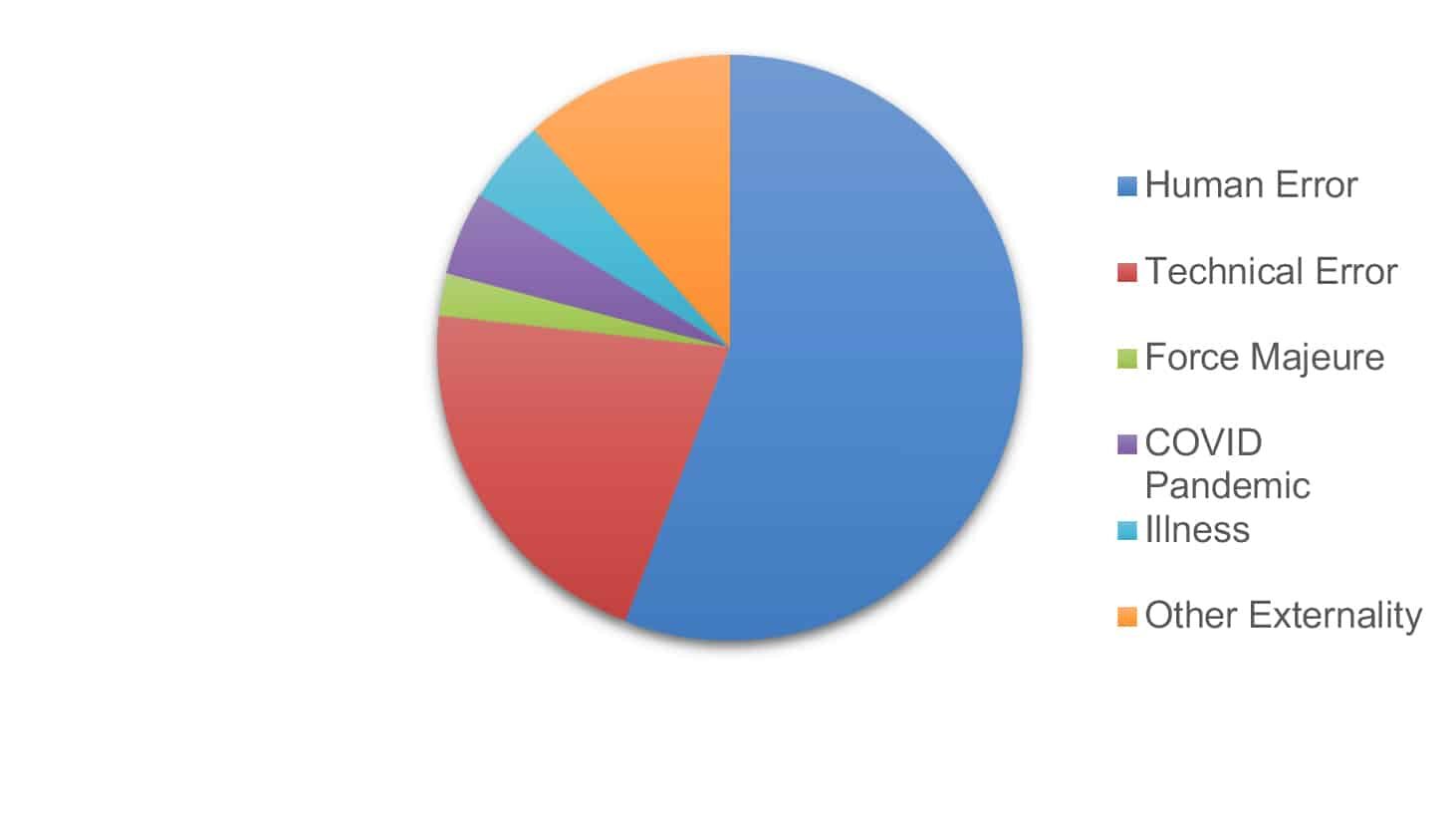
For the decisions where it was determined that due care was taken, Figure 2 shows the reason for the failure to pay.

Figure 2
Cases in which due care has not been met

As evident from the foregoing, the vast majority of reinstatement requests result in CIPO making a finding that due care was not taken. A recent decision from the Federal Court was the first judicial decision reviewing a denied request for reinstatement.

Taillefer v. Canada (Attorney General), 2024 FC 259

CIPO’s strict application of the due care standard was upheld in Taillefer v. Canada (Attorney General), 2024 FC 259, where the applicant unsuccessfully sought judicial review of a decision of the Commissioner of Patents denying a request to reinstate Canadian Patent 2,690,767 that was deemed abandoned for failure to pay the tenth anniversary maintenance fee.

In Taillefer, the Canadian patent agent sent several email reminders to the applicant regarding the tenth anniversary maintenance fee and the late fee. However, the applicant did not respond to any of the agent’s emails. As the agent did not receive instructions, the agent did not pay the maintenance fee nor the late fee.

After the agent informed the applicant of the deemed abandonment of the patent, the applicant found the agent’s emails in their junk email folder. The applicant then instructed the agent to seek reinstatement. In the reinstatement request, the agent indicated “[t]o the best of his knowledge, the patent owner did not take any actions which would cause [the] emails to be directed to his junk folder, and had no reason to regularly check his junk folder for relevant emails.”

The Commissioner rejected the request for reinstatement, finding that there was not “any other action that was taken, or even considered, by the agent or the patentee, to ensure that communication channels remain[ed] effective and the Fees [we]re paid on time…”

In dismissing the application for judicial review, the Federal Court stated “it is my view that it was reasonable for the Commissioner to have looked at steps that could have avoided the communication failure and to have expected that the Agent would have additional communication mechanisms in place… Similarly, in my view it was reasonable for the Commissioner to expect that a reasonably prudent patentee would have a system in place to make sure that their email was operating effectively if they were relying on this as the primary communication means to pay their maintenance fees.”

At the time of writing, the patentee in Taillefer had filed a notice of appeal in respect of the Federal Court decision.

Cases in which due care has been met

Despite CIPO’s strict application of the due care standard, there have been successful instances of reinstatement.

Canadian Application No. 2,862,859

Canadian Application No. 2,862,859 was the first application to be successfully reinstated. The application was initially allowed in 2019, but the application was abandoned for failure to pay the final fee. The Canadian agent for the applicant confirmed with the applicant that an annuity service provider would attend to payment of the maintenance fees, and the agent accordingly removed the deadlines from their docketing system. Subsequently, the applicant requested that the agent attend to the 2020 maintenance fee. However, a staff member at the agent erroneously uploaded these instructions into the docketing system.

Initially, the Commissioner provided a letter of intent to refuse reinstatement on the basis that the request did not include any details relating to the training and supervision of the staff member in question, or of the docketing system and how instructions were entered.

In response, the applicant filed further submissions relating to the staff member and docketing system. These submissions were sufficient for the Commissioner to determine that due care was taken.

Canadian Application No. 2,926,031

The late period for payment of the 7th anniversary maintenance fee payment for Canadian Application No. 2,926,031 expired on April 4, 2022. The applicant was the sole inventor as well as the sole proprietor of his business. Beginning in August 2019, the applicant received two potentially fatal medical diagnoses back-to-back, for which treatment concluded in December 2022. As a result, the applicant was faced with difficult financial decisions when the maintenance fee came due and opted to allow the application to be abandoned so as to be able provide for his family in case he did not survive. These submissions were sufficient for the Commissioner to determine that due care was taken and the application was reinstated.

Concluding Remarks

As evident from the foregoing, it is clear that the CIPO applies the due care standard strictly. Agents and applicants/patentees should ensure that there are reliable docket systems in place, and that there are redundant forms of communication available so as to ensure that deadlines are not missed.

Should you have any questions regarding the due care standard or any other aspect of your patent portfolio, we invite you to reach out to your usual Oyen Wiggs contact.


[1] Patent Act, RSC 1985, c P-4, [Patent Act] sections 46(2)(b), 73(1)(c)
[2] Patent Act, sections 46(5), 73(3)
[3] Patent Act, section 73
[4] Due Care Decisions reported at: https://ised-isde.canada.ca/site/canadian-intellectual-property-office/en/patents/maintain-your-patent-application-or-granted-patent/reverse-expired-patent/determinations-related-due-care

FEDERAL COURT CONSIDERS FAIR DEALING IN PASSWORD SHARING CASE

The Federal Court recently issued a decision in 1395804 Ontario Ltd. (Blacklock’s Reporter) v. Canada (Attorney General), 2024 FC 829 arising from a summary judgement motion brought by the Attorney General of Canada.

Blacklock’s Reporter, a subscription-based news corporation, alleged that officers at Parks Canada acted contrary to the Copyright Act (the “Act”) by sharing a password to a single subscription to obtain and internally distribute Blacklock’s Reporter’s news articles. The Attorney General of Canada’s motion sought various declarations from the Court, which could also impact on other pending cases between the Crown and Blacklock’s Reporter.

The Court granted a declaration that Parks Canada’s use of the password in the circumstances constituted fair dealing under section 29 of the Act.

The Court considered that Parks Canada purchased the only type of subscription available, which provided the password required to access news articles produced by Blacklock’s Reporter. The Court also took into consideration that the subscription was used solely for monitoring news articles directly related to Parks Canada’s mandate and operations, which constituted fair dealing for the purpose of research.

The Court declined to address the issue of whether a password is a “technological protection measure” as defined in section 41 of the Act, but did grant a declaration that the licit acquisition and valid use of a password does not otherwise constitute circumvention of the technological protection measures of the Act.

For more information, read the decision here.

Federal Court of Appeal Considers Sufficiency of Disclosure in Patent Applications

In Eli Lilly Canada Inc. v. Apotex Inc., (2024 FCA 72), the Federal Court of Appeal (“FCA”) considered the threshold for sufficient disclosure of a patent application in reviewing the decision of the Federal Court that found various claims of Canadian Patent No. 2,226,784 to be invalid.

The appeal centered largely on the definition of a “physiologically acceptable salt of tadalafil” and whether the patent provided sufficient disclosure regarding physiologically acceptable salts of tadalafil.

While the FCA confirmed that a patent specification may be sufficient even if some amount of non-inventive trial and error experimentation is required to re-create the invention, the FCA ultimately upheld the decision of the Federal Court citing evidence that the search for a physiologically acceptable salt of tadalafil requires a lot of experimental work and requires a skilled person to exercise some degree of inventiveness.

A copy of the full decision is available here.

Assessing Likelihood of Confusion Between Trademarks: State of the Trademark Register Must Be Combined with Evidence of Actual Use of Third Party Marks

In November 2017, Performance Mechanics Panthera Motorsports Inc. filed a Canadian trademark application for the PANTHERA logo ( ) covering motorcycle and off-road vehicle engines and sporting clothing.  The application was opposed by Jaguar Land Rover Limited on several grounds, including a likelihood of confusion between the applied-for mark and Jaguar’s registered marks for the Leaper logo ( ).
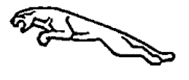
Both parties filed evidence before the Trademarks Opposition Board. Notably, Panthera filed an affidavit introducing evidence of the state of the Trademark Register.

In a decision issued on May 29, 2023, the Trademarks Opposition Board found that there was a likelihood of confusion between Panthera’s logo and Jaguar’s Leaper logo and refused registration of Panthera’s trademark.  In reaching this decision, the Trademarks Opposition Board noted that in considering the circumstances of the case, with respect to the state of the Trademark Register, the affidavit filed by Panthera was insufficient, as it did not provide any information regarding the marketplace use of the trademarks identified in the affidavit.

Panthera appealed the decision to the Federal Court and filed a new affidavit introducing evidence regarding the commercial use of images of felines in the vehicle industry.  The Court accepted the new evidence, considering it as “being important and having sufficient probative value relevant to the case” and that it would have had an impact on the Trademarks Opposition Board’s decision in relation to the likelihood of confusion ground of opposition.

In light of the new evidence filed, in a decision issued on May 27, 2024, the Court found that Panthera’s mark was not likely to cause confusion with Jaguar’s brands and rejected the opposition.  Among other things, the Court noted that the evidence demonstrated that the use of images of felines was widespread in the vehicle industry, and Panthera’s evidence of actual use of these trademarks favoured Panthera’s argument that there was no likelihood of confusion between and .

Patent Term Adjustment Coming Soon to Canada

Under the Canada–United States–Mexico Agreement (CUSMA), Canada has agreed to provide a means to adjust the term of a patent when the CIPO causes unreasonable delays. The new rules would come into force on January 1, 2025, and will only apply to patents based on an application filed on or after December 1, 2020.

Under the proposed rules, the additional term could apply when the issue date is more than the later of: (i) five years from the filing/national entry date; and (ii) three years from requesting examination. The additional term would be determined as the number of excess days (beyond the previously mentioned deadline) less a number of days such as days during the prosecution of the application where processing/examination was delayed other than by the CIPO.

The term adjustment would need to be requested by the applicant. If the application is accepted the CIPO would make a preliminary assessment of the term extension. There would then be a period where the CIPO would receive submissions from both the patentee and third-parties, after which the final extension length would be decided.  After an additional term is granted, third parties would be able to challenge the length of the term adjustment.

More information can be found here.

Oyen Wiggs welcomes two new Summer Students

We are pleased to welcome two new summer students to the firm.  Noah Kingston and John Cookson started with the firm in early May.  Noah and John are both completing their JDs at Peter A. Allard School of Law.  We look forward to their contributions to the firm this summer.

CPATA Releases Results for First Knowledge Examinations

The College of Patent Agents and Trademark Agents (CPATA), the independent regulator of patent and trademark agents in Canada is responsible for administering examinations that qualify candidates to practice in Canada.  Recently, CPATA had embarked on an initiative to overhaul the examinations.  The examinations were previously divided into several papers directed to different areas of practice and tested both knowledge and skills.

As a result of the initiative, the examinations have been reorganized into separate knowledge examinations and skills examinations. Candidates are required to demonstrate competency on the knowledge examinations in order to be eligible to write the skills examinations.

The first of the knowledge examinations was administered in March 2024.  On May 1, CPATA released the results of these first knowledge examinations.  86% of candidates demonstrated competency on the Trademark Knowledge Examinations. 96% of candidates demonstrated competency on the Patent Knowledge Examinations.

The first skills examinations will be administered for the successful candidates in the fall.

For more information, please see CPATA’s article here.

Leave to Appeal to the Supreme Court of Canada Filed in Pharmascience Inc. v. Janssen Inc. (2024 FCA 23)

An application for leave to appeal the decision in Pharmascience Inc v. Janssen Inc. (2024 FCA 23) was recently filed by Pharmascience in the Supreme Court of Canada (SCC).

In the Federal Court of Appeal (FCA) decision, the FCA upheld the Federal Court’s finding that the claims of the relevant patent owned by Janssen reciting a dosing regimen did not comprise unpatentable methods of medical treatment and were valid. The FCA noted, in part, that “whether… a dosing regimen relates to a method of medical treatment cannot be based exclusively on whether its dosing and schedule is fixed or not” and “[t]he proper inquiry remains whether use of the invention… requires the exercise of skill and judgment” (at para 37). The Court also stated that it would be difficult to provide more detailed guidance on this issue since allegations that claims are invalid due to claiming methods of medical treatment will generally turn on the particulars of the case and the evidence on record (at para 37).

If leave to appeal is granted by the SCC, this would give the SCC an opportunity to consider and potentially clarify the framework for assessing the patentability of methods of medical treatment.

Read the FCA’s decision here. View the Supreme Court of Canada case information for this leave to appeal here.

FEDERAL COURT OF APPEAL CONSIDERS INTERPRETATION OF “USE” OF A PATENTED INVENTION IN THE CONTEXT OF INFRINGEMENT

The Federal Court of Appeal (“FCA”) recently considered the issue of what constitutes “use” of a patented invention for the purposes of proving infringement of a patent under section 42 of the Patent Act (the “Act”).

Steelhead LNG (Aslng) LTD. (“Steelhead”), appealed a summary trial judgment of the Federal Court wherein the Federal Court dismissed Steelhead’s patent infringement action against Arc Resources (“Arc”).

At the summary trial, Steelhead argued that Arc used Steelhead’s invention and infringed Steelhead’s patent by disclosing to prospective business partners and stakeholders, as a proof of concept, drawings, specifications and cost estimates of a design which, if ever built, would allegedly infringe the patent. Notably, such design was never built. The motion judge reviewed the relevant case law and concluded that the case law indicates that infringement under section 42 of the Act requires physical use of the invention. Consequently, the motion judge dismissed Steelhead’s claims.

At the appeal, Steelhead advanced the argument that the meaning of “use” under section 42 of the Act grants a patentee the exclusive right, privilege and liberty of using the goal, purpose or advantage of an invention for commercial benefit. However, the FCA was not persuaded by Steelhead’s argument. The appeal was dismissed accordingly.

A copy of the full decision is available here.

Federal Court Decision Highlights the Challenges of Navigating a Federal Lawsuit Without Representation

The Federal Court recently released a decision in Alam v. Drew Bieber (2024 FC 499) arising from a motion for default judgment. The plaintiff, a self-represented litigant, had alleged that Justin Bieber infringed the plaintiff’s “copyright in the song and in the lyrics” with Bieber’s song “Stay”.

The defendant did not file a statement of defence, and in fact, the only documents filed by the defendant were those responding to the plaintiff’s motion for default judgment. Nevertheless, the court dismissed the case and issued costs of $850 against the plaintiff.

The court described how the plaintiff failed to follow the Federal Courts Rules in numerous ways, including failing to disclose a proper cause of action in the pleadings, failing to properly effect service, failing to properly bring documents before the court, failing to properly swear affidavits, and failing to file evidence on the merits of the claim. All together, these failings were fatal to the plaintiff’s case and resulted in costs awarded against him.

Self-represented litigants should take this case as a warning that bringing an action in Federal Court is a complex task, which can easily fail due to technicalities. Self-represented litigants should carefully review the Federal Courts Rules to minimize the chances of their cases being dismissed on technical grounds, or consider whether they may be able to bring an action in provincial small claims courts, which may be significantly easier to navigate for self-represented litigants.

get_sidebar();